



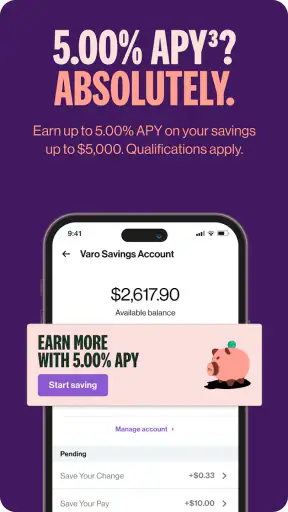
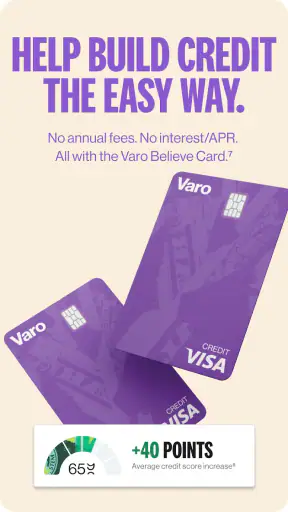
I approached Varo Bank: Online Banking as a practical money-management tool rather than as another app I would open only when checking a balance. It is a free finance app from Varo Bank, N.A., built around mobile banking, early access to pay and cash advances. After spending time with it, my impression is that it makes the most sense for someone who wants banking tasks, short-term cash tools, and everyday account monitoring in one place.
The app is available to everyone from an age-rating perspective, and its broad reach is easy to understand: it has passed five million installs and holds a 4.5 average from roughly 245 thousand ratings. Those figures do not automatically make it the right bank for every person, but they do suggest that Varo has become a familiar option for people looking for a mobile-first alternative to a traditional branch experience.
How Varo feels in everyday banking
My first useful takeaway is that Varo is designed for people who prefer handling money from a phone instead of visiting a branch or navigating a large, old-fashioned banking website. The experience is centered on quick checks and frequent decisions: seeing what is available, watching incoming money, reviewing spending, and deciding whether a short-term advance is appropriate.
That focus gives the app a clear personality. It is less about offering every financial product imaginable and more about making routine banking feel immediate. If your idea of a good banking app is one that lets you check your position quickly before paying a bill or buying groceries, Varo has a strong argument. I found the mobile-first approach more useful for regular awareness than for occasional, complicated financial administration.
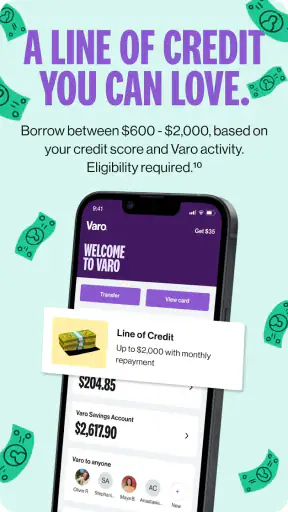
The store summary emphasizes early payday access and cash advances without a fee, but I would not treat that sentence as a promise that every user receives every option under identical conditions. Financial tools often depend on eligibility and account circumstances. The sensible approach is to open each offer inside the app, read its terms, and consider whether using it solves a genuine timing problem or simply delays one.
That distinction matters. An early-pay feature can be convenient when a deposit arrives on a predictable schedule and an essential payment falls just before it. A cash advance can also help with a short gap. Neither tool should become a substitute for a sustainable budget. I see Varo as most useful when these options remain occasional safety valves rather than part of a weekly borrowing routine.
A realistic payday-gap example
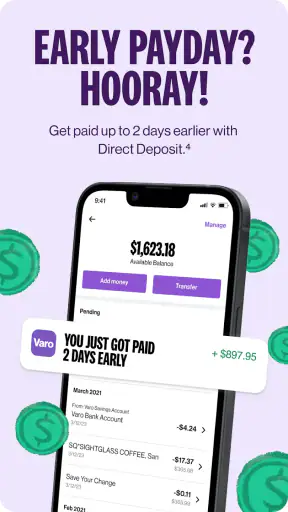
Imagine that I have enough income coming in, but a utility bill is due two days before that deposit. With Varo, I would first check the account balance and expected activity, then examine whether early access or an advance is available and what accepting it would mean for the next deposit. The important workflow is not simply tapping the fastest option. It is comparing the short-term relief with the amount I will have available afterward.
That habit is one of the app's less obvious strengths. A mobile bank can encourage quick decisions, but it can also make those decisions visible at the moment they matter. I would use the app to confirm the timing, record the payment, and revisit the account after the deposit arrives. This is more responsible than treating an advance as extra income.
For someone paid on a regular schedule, that kind of timing support may be genuinely helpful. For someone with irregular freelance income, unpredictable deposits, or several overlapping obligations, the same tools require more caution. The app may show what is available now, but it cannot replace a broader cash-flow plan that accounts for income uncertainty.
What the current version tells me
The current version is 4.39.0, and that is useful context when judging the app's present state. It indicates that Varo is a maintained product rather than a neglected banking utility frozen after its initial launch. The app was released on October 1, 2020, so it has had time to develop beyond a simple balance viewer.
I would still separate that version information from assumptions about particular changes. A version number alone does not prove that a specific feature was added, redesigned, or improved in a particular release. What I can reasonably say is that the product has continued evolving, while the features I would pay closest attention to are the ones affecting clarity, speed, eligibility explanations, and control over everyday money.
For existing users, continued version updates are most valuable when they reduce friction rather than merely add more options. In a finance app, a small improvement to transaction visibility or account navigation can matter more than a flashy new tool. My standard would be simple: can I understand where my money is, what is pending, and what a borrowing option will do to my next pay cycle?
That is also where the developer matters. Varo Bank, N.A. is not presented as a generic budgeting software company; the app represents a banking relationship. I would therefore judge it more strictly than a standalone spending tracker. Reliability, understandable terms, and confidence during urgent moments matter as much as visual polish.
Who benefits most from the mobile-first approach
Varo is a natural fit for someone who wants a primary banking experience that stays close at hand. It may suit a worker who checks deposits from a phone, a person moving away from branch-based banking, or someone who wants early-pay and short-term cash tools considered alongside normal account activity.
I can also see value for a user who is trying to become more attentive to spending. Opening a banking app before making a purchase creates a useful pause, especially when the balance is not the same as the amount that is truly safe to spend. That pause is easy to skip with a traditional account that I rarely check, while a phone-based account invites more frequent review.
Another practical use is separating “money available now” from “money I need to protect.” Even without relying on an advance, checking the account before recurring bills clear can prevent an avoidable mistake. I would make a short routine of reviewing the account after income arrives, before major payments, and after any early-pay decision. The value comes from the routine, not from opening the app dozens of times.
Where it differs from familiar alternatives
Compared with a conventional bank app, Varo feels more focused on immediate access and mobile convenience. A traditional bank may be preferable if I value a nearby branch, a long-established relationship with a local institution, or a wider range of services under one roof. The usual alternative can also feel more comfortable for people who want to discuss complicated financial matters with a person rather than manage everything through a screen.
Compared with a budgeting app, Varo serves a different purpose. A budgeting tool may bring accounts together and concentrate on planning, categories, or long-term spending analysis. Varo is closer to the account itself. I would choose it when access to banking and cash flow is the priority, not when I mainly want a detailed overview of several financial institutions.
Compared with a payroll-access service, Varo's advantage is that early-pay and cash-related tools sit inside a broader banking experience. That can reduce the need to jump between apps. The trade-off is that I would need to understand the account relationship and eligibility rules rather than assuming the service works like a standalone advance product.
These comparisons lead to a useful decision rule: choose Varo for a mobile banking home base with short-term access features; choose a traditional bank when branch support and a broader relationship matter more; choose a budgeting app when analysis across multiple accounts is the main goal.
Small habits that make the app safer to use
My first tip is to treat the balance as a starting point, not a spending limit. Before accepting an advance or using early access, I would look at upcoming obligations and ask what the next deposit will need to cover. This prevents the common mistake of solving today's shortage by creating tomorrow's.
My second tip is to review the details of an offer when I am calm, not when a bill is already overdue. Eligibility, repayment timing, and any conditions deserve attention before urgency takes over. The phrase “no-fee” is helpful, but it should not stop me from considering the wider effect on cash flow.
My third tip is to use the app as a checkpoint around deposits. I would verify that expected money has arrived, then check whether planned payments still leave a comfortable buffer. This is especially useful for people whose account activity is busy enough that a quick glance can otherwise create false confidence.
A fourth insight is that convenience can become a weakness if notifications or frequent access encourage impulsive borrowing. I would keep the app's fast tools mentally separate from ordinary spending money. The easier it is to request funds, the more important it becomes to decide in advance what qualifies as a real emergency.
Limitations I would consider before switching
The biggest limitation is not necessarily a missing button; it is the risk of confusing access with affordability. Early payday access and cash advances address timing, but they do not increase long-term income. Someone already relying on advances to cover normal living costs may need a different solution, such as a spending review, debt counseling, or a bank arrangement with stronger planning support.
I would also hesitate to make Varo my only financial tool if I needed extensive account aggregation, advanced investment management, or branch-based assistance. The app's appeal comes from its focused mobile banking model, and that focus will not satisfy every kind of customer. A person with complicated finances may prefer a larger institution or a separate planning platform alongside a basic bank account.
Another point is that digital convenience assumes I am comfortable resolving questions through the app and its available support channels. If I strongly prefer face-to-face service, a mobile-only style can feel limiting even when the core banking functions work well. This is less about quality than fit: the best interface is not always the best relationship for a particular customer.
I would also avoid choosing it solely because the app is free. Free access is attractive, but the real decision should include how the account fits my income schedule, spending habits, and need for other services. A free product that encourages unsuitable borrowing is not a bargain for me.
What existing users should notice as the app evolves
For current users, I would watch how clearly new or revised screens explain eligibility and repayment. Financial apps can become more capable while also becoming harder to understand. Any evolution is positive only if the important consequences remain visible before I confirm a transaction.
I would also pay attention to whether routine tasks stay quick. A banking update should not make checking a balance, reviewing activity, or confirming a deposit unnecessarily complicated. Existing customers may notice these changes more than new users because they already have a familiar workflow and can tell when a previously simple action has gained extra steps.
Another area worth watching is the relationship between early-pay tools and ordinary account management. The best experience would make it obvious which funds are already available, which are arriving, and which action changes the timing of access. Clear separation helps prevent accidental overspending and makes the app useful even when I never take an advance.
I would not judge future releases by the version number alone. I would judge them by whether they improve confidence, reduce surprises, and give users enough context to make informed decisions. That is the standard I would apply to any banking product, but especially one built around fast access to money.
My final recommendation
After considering the whole experience, I think Varo is worth a close look for people who want mobile banking with early-pay and cash-access options in the same app. Its free price, broad availability, and established presence make it approachable, while the 4.5 average and more than five million installs show that it has attracted a substantial audience.
I would recommend it to a user who checks money from a phone, values quick account visibility, and can use advances selectively rather than depend on them. I would not recommend switching purely for the promise of faster access if the underlying budget is already under pressure. In that situation, a more planning-oriented service or a bank with stronger personal support may be the better choice.
The app's strongest quality is practical immediacy: it puts everyday banking decisions close to the moment they happen. Its main risk is the same immediacy, because a fast solution can make a recurring cash problem feel temporarily solved. Used with discipline, Varo Bank: Online Banking can be a convenient financial home base. Used without a clear repayment plan, its most attractive tools may become the reason I keep falling behind.
That balanced view is why I would suggest trying it carefully rather than treating it as an automatic upgrade. Start with ordinary account management, learn how the money-flow tools affect your schedule, and decide whether the mobile-first experience genuinely improves your habits. If it does, Varo has a useful role. If what you really need is detailed planning, branch guidance, or a broader financial relationship, another option will likely serve you better.


